How the Square Neck Holds the Bolt in Place
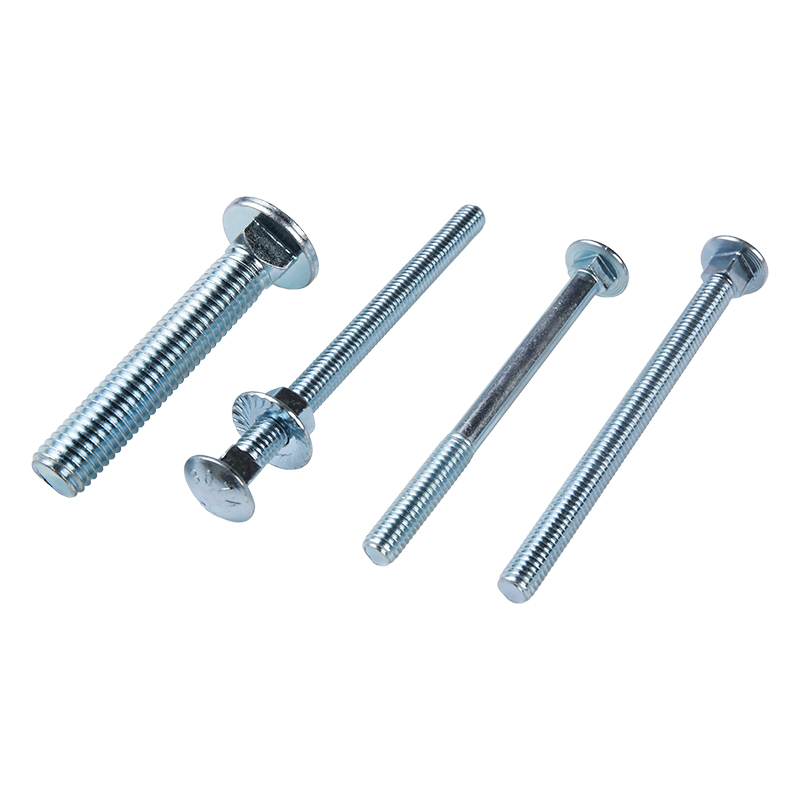
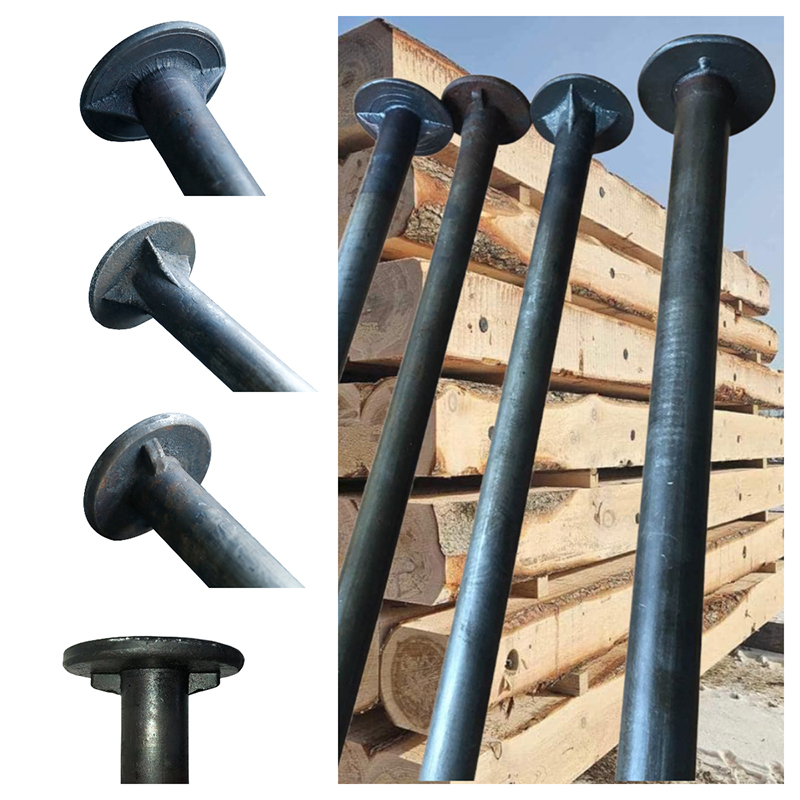
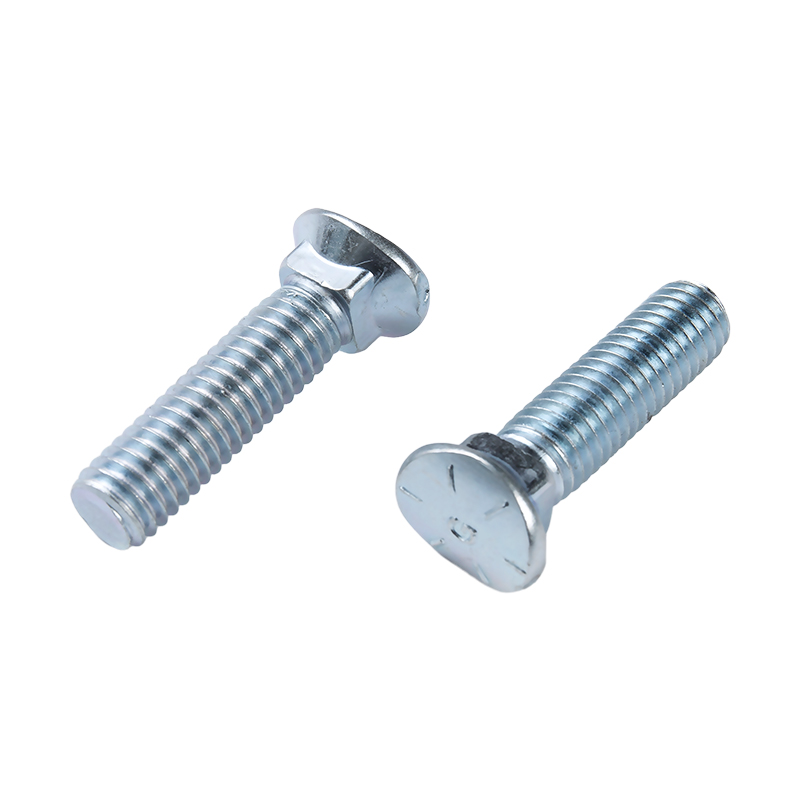
A carriage bolt has a smooth, domed head and no drive feature. Directly beneath the head sits a short square section. When you pull the bolt through a drilled hole, the square presses into the wood fibers and locks against rotation, so the nut can be tightened from the other side without holding the head.
This is why round head square neck carriage bolts are a standard choice for fences, decks, gates, playground frames and timber framing. The rounded head is also hard to grip or unscrew from outside, which gives a modest tamper resistance and a smooth surface where people or livestock may brush against it.
The design has one limit. The square neck only grips materials soft enough to let it seat. In hardwood, dense engineered lumber or thin metal, the neck may fail to bite, and the bolt will spin. In those cases, a square hole in the mating part, or a different bolt style, is the better answer.
Choosing the Grade and Material
Carriage bolts come in mild steel, medium-strength alloy grades and stainless steel. The right choice depends on the load and on how much moisture the joint will see.
- A307 and SAE J429 Grade 2: low-carbon steel for general wood connections, fencing and light framing.
- SAE J429 Grade 5 and Grade 8: heat-treated steel for heavier loads, where the bolt itself, not the wood, is the weak point.
- Metric classes 4.8 and 8.8: the metric counterparts, with 8.8 offering roughly double the tensile strength of 4.8.
For coastal decks, boat docks, food-processing areas and chemical environments, stainless steel carriage bolts remove the corrosion problem that even a heavy zinc coating eventually faces. They cost more upfront, but they avoid the rust streaks and premature replacement common with coated carbon steel in wet locations.
Keep in mind that a higher grade only helps if the joint can use it. In most timber connections, wood bearing capacity decides the strength of the assembly, so a Grade 8 bolt in soft pine adds cost without adding capacity.
Standards, Sizes and Coatings at a Glance
Three standards cover most carriage bolt orders: ASME B18.5 for inch sizes, and DIN 603 and ISO 8677 for metric sizes. Each defines head diameter, neck dimensions and length tolerances, so matching the standard to your drawing prevents fit problems on site.
Typical specification range for carriage bolts
| Parameter |
Range |
| Material |
Carbon steel, stainless steel |
| Standard |
ASME B18.5, DIN 603, ISO 8677 |
| Neck length |
Short, regular, long, special |
| Thread diameter |
1/4" to 7/8" (M6 to M24) |
| Length |
1/2" to 20" (10 mm to 500 mm) |
| Coating |
Plain, black oxide, zinc, hot-dip galvanized |
For coatings, zinc plating suits indoor or sheltered use. Hot-dip galvanizing is the better fit for outdoor structures and treated lumber. Black oxide is mostly cosmetic, offering only light protection when combined with oil. A special neck length is worth considering when you fasten thick timber or laminated layers, since a longer square section keeps the bolt seated across more of the joint.
Getting the Length Right and Installing Correctly
Length is the most common ordering mistake. Add the thickness of every layer in the joint, then the washer and the nut, then allow at least one to two full threads to extend past the nut. Note that the head height does not count, because the head sits outside the clamped stack.
When you drill, keep the hole straight and matched to the bolt diameter or the size on your drawing. Insert the bolt and draw the square neck into the wood by tightening the nut, not by driving the head with a heavy hammer. Light taps are fine to start the neck, but hard blows split the wood around the hole.
- Drill through all members in one pass so the holes align.
- Insert the bolt from the side where a smooth surface is needed.
- Fit a flat washer under the nut to spread the load on the wood.
- Tighten until the neck is fully seated and the joint is firm.
For projects that call for a specific standard, size or finish, custom carbon steel carriage bolts can be produced to your drawings or samples. Recheck the nuts after the first season, because timber shrinkage can leave a joint looser than it was on installation day.

 English
 Español