English
 Español

Industry News
Home / News / Industry News / Timber Bolts Guide: Types, Sizes, Materials and How to Choose the Right One
Timber Bolts Guide: Types, Sizes, Materials and How to Choose the Right One
Sep 29, 2026
Content
Timber bolts are the fasteners that hold the big pieces together. When a deck frame, a pergola post, a barn beam or a heavy piece of outdoor furniture has to stay put for years, a small screw simply will not do the work. You need a fastener with enough diameter to carry the load, enough length to pass through the full thickness of the timber, and a finish that can survive the weather. That is exactly the job a timber bolt is built for.
At SINI FASTENER we have been manufacturing bolts and screws since 2004, and heavy-duty timber fasteners are one of the categories our customers in construction hardware, machinery and furniture come back for again and again. In this guide we share what we have learned on the shop floor about head styles, sizes, materials and the small details that decide whether a timber connection performs quietly for a decade or starts to work loose in a season.
What Exactly Is a Timber Bolt?
A timber bolt is a large-diameter, heavy-duty threaded fastener used to clamp two or more pieces of timber together. It is normally installed through a pre-drilled hole and tightened with a nut and one or two washers. Because the load is carried by the shank and the nut rather than by threads biting into the wood, timber bolts suit structural connections where movement, vibration or seasonal shrinkage is a real concern.
The drilled hole matters as much as the bolt. A hole that is too tight splits the timber and strips the coating; a hole that is too loose lets the joint shift. As a working rule, drill the hole slightly larger than the bolt diameter so the shank passes through without forcing, then let the washer and nut do the clamping.
Are Timber Bolts and Carriage Bolts the Same Thing?
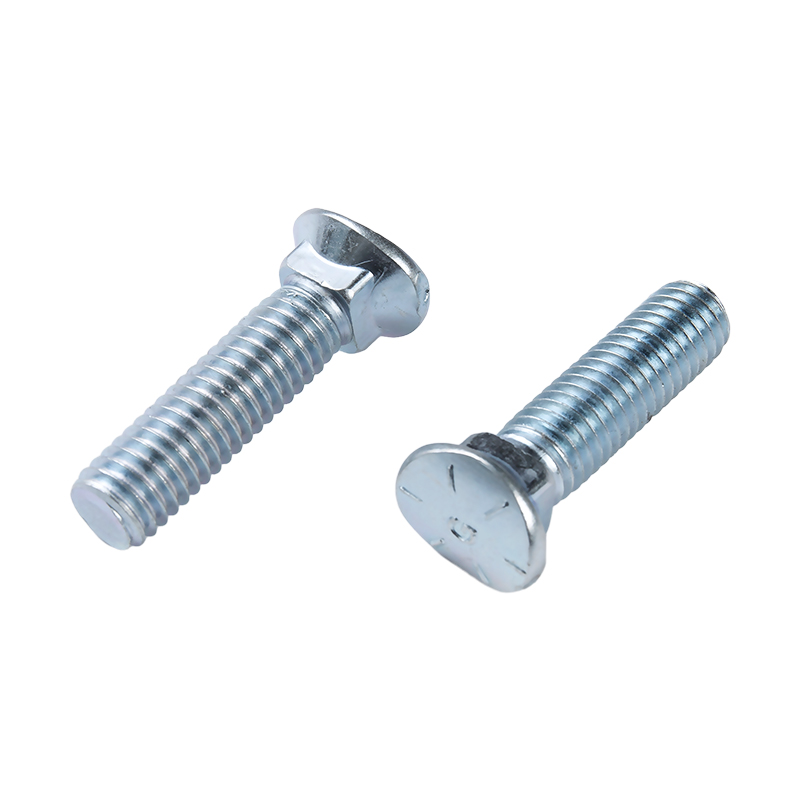
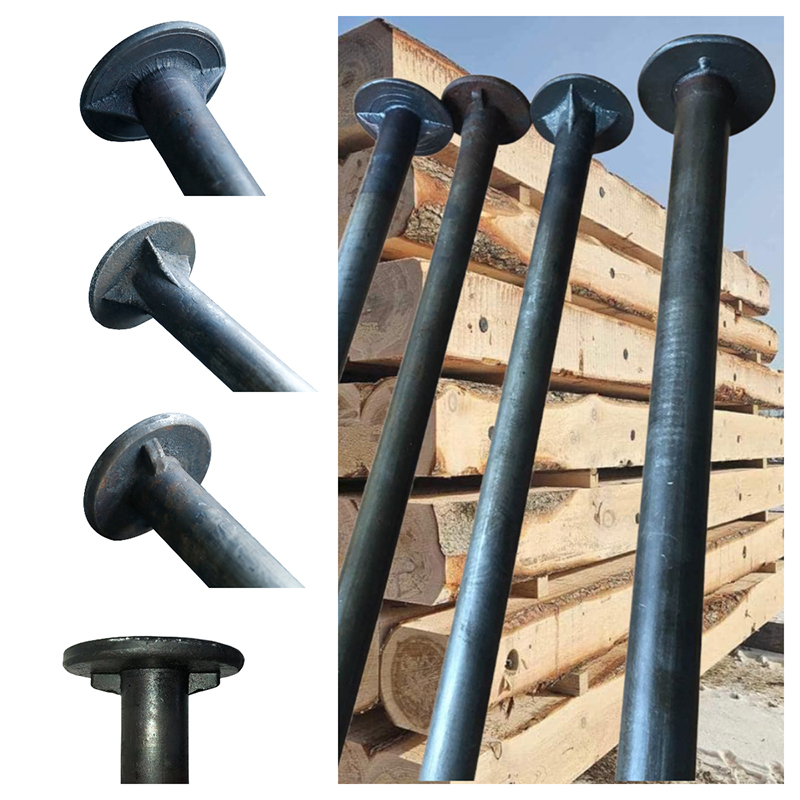
This is one of the most common questions we hear from buyers, and the honest answer is that the two are related but not identical. Carriage bolts are a broad family of round-head, square-neck bolts used in wood-to-wood and wood-to-metal assemblies, and many of them are relatively short and modest in diameter. Timber bolts are generally larger in diameter and are supplied specifically for heavy timber work, where the fastener passes through thick members and is closed with a nut on the far side.
Because both designs can carry a domed head with a square neck underneath, the confusion is completely understandable. If you are unsure which one your project needs, tell us the thickness of the timber, the load it will see, and whether the fastener will be tightened with a nut. We will tell you plainly which product fits, even when that means a smaller order for us.
Head Styles and Where They Belong
Head style is mostly about how the bolt meets the face of the timber. A structural frame hidden from view has different priorities from a bench or a handrail that people touch and look at every day.
| Head style | How it sits | Typical use |
|---|---|---|
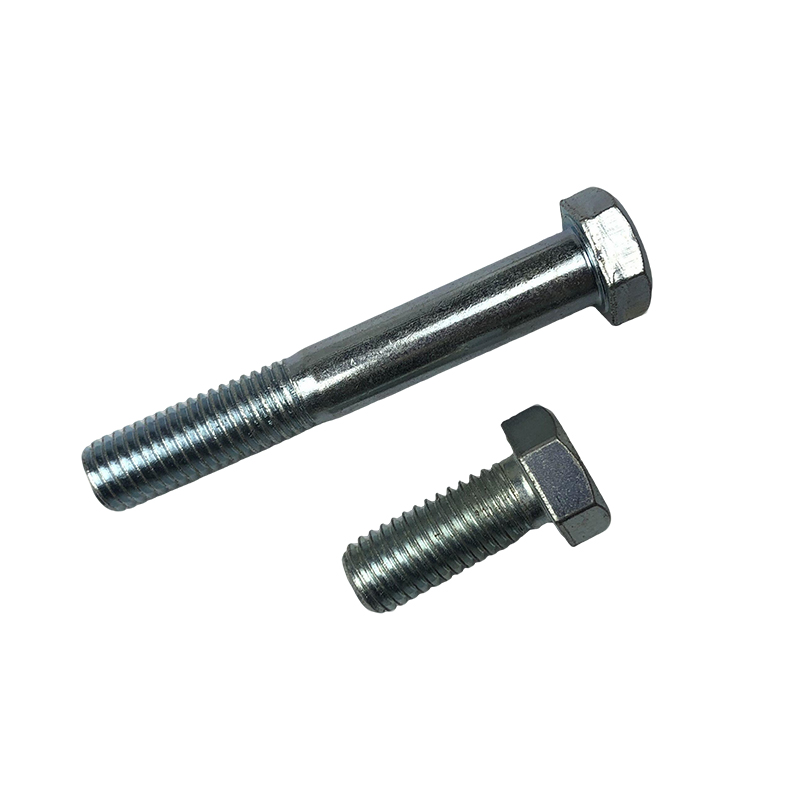
| Hex head | Stands above the surface, tightened with a socket or wrench | Structural frames, machinery bases, heavy assemblies |
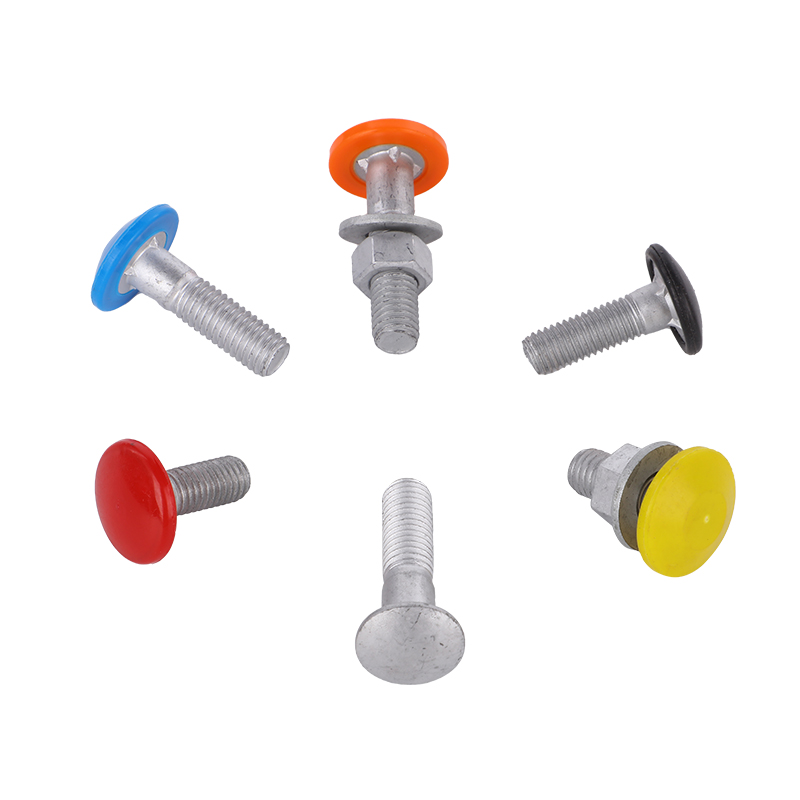
| Dome head with square neck | Rounded head, square neck bites into the wood to stop rotation | Decks, fences, outdoor furniture, exposed surfaces |
| Round head | Smooth bearing surface, low profile | General timber assembly, garden structures |
| Countersunk head | Sits flush with or just below the timber face | Flush finishes, flooring, furniture frames |
A square neck is a small feature with a big effect. Once the bolt is drawn in, the neck bites into the wood and stops the bolt from turning while the nut is tightened, which means one person can complete the installation from a single side.
Sizes, Threads and Standards
Timber bolts are ordered by diameter and length, and both inch and metric sizes are widely used depending on the market. Our bolt production covers diameters from 3/16 inch to 1 1/2 inch (5 mm to 52 mm) and lengths from 1/2 inch to 60 inches (10 mm to 1500 mm), which covers most timber connections we are asked about. Matching screws run from #4 to 1/2 inch (3.5 mm to 12 mm) in diameter over the same length band.
Two practical points come up in almost every enquiry:
- Bolt length is measured from under the head to the end of the shank. Add the thickness of all members, plus the washer, plus the nut, plus a few millimeters of thread showing beyond the nut.
- Thread length is usually partially threaded. Keep the unthreaded shank inside the timber where the joint may move, and let the threads sit where the nut tightens.
On standards, our products are manufactured to meet DIN and IFI requirements, and we also produce to customer-specific designs and drawings when a standard part will not do. That flexibility is often what decides a project, because a timber connection sketched by an engineer rarely matches a catalogue page exactly.
Materials and Corrosion Protection
Most timber bolts are produced in carbon steel or stainless steel, and the choice usually follows the exposure conditions rather than the load.
- Carbon steel with zinc plating: a cost-effective option for dry, protected interiors and covered assemblies.
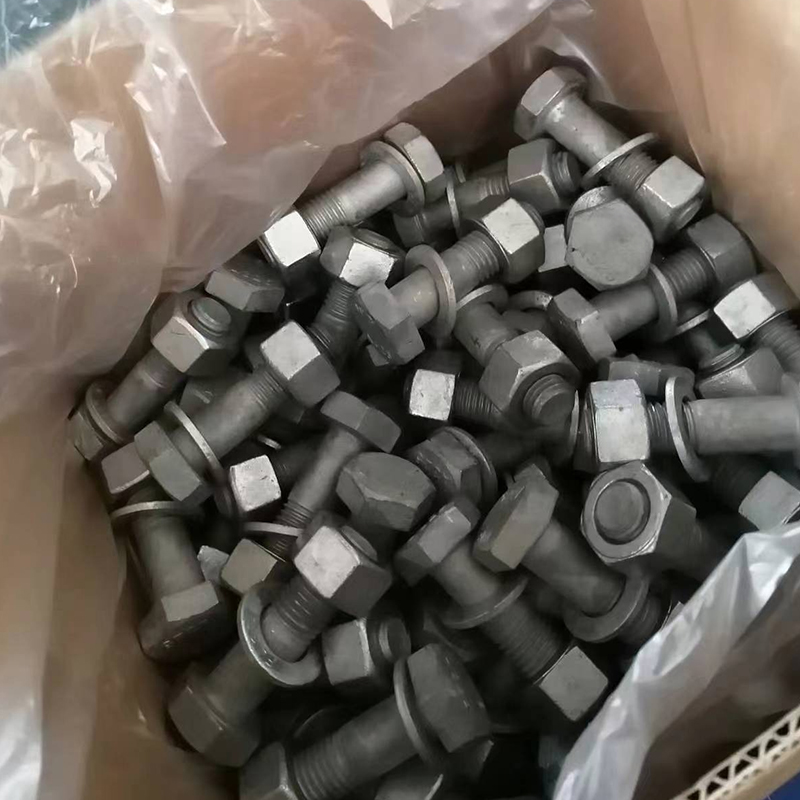
- Hot-dip galvanized carbon steel: a thicker zinc layer that stands up to outdoor weather and to pressure-treated lumber.
- Stainless steel 304: good general corrosion resistance for exterior furniture, railings and coastal-adjacent projects.
- Stainless steel 316: the choice for salt spray, marine air and chemically aggressive environments.
One warning we repeat often: modern copper-based timber treatments can attack zinc coatings through galvanic reaction. If your lumber is treated, either specify hot-dip galvanizing with a suitable thickness or step up to stainless steel. Saving a little on the coating usually costs far more when the bolts are replaced five years later.
How to Choose the Right Timber Bolt
When a customer asks us to help specify a bolt, we walk through the same short sequence every time.
- Confirm the connection type. Is it timber to timber, timber to steel, or a bolted bracket detail?
- Add up the total thickness of all members being clamped to establish the minimum length.
- Set the diameter from the load and the timber species, remembering that a larger hole removes more wood fibre.
- Pick the head style based on whether the face will be visible and whether a flush finish is needed.
- Select the material and coating according to indoor, outdoor, treated lumber or marine exposure.
- Specify washers. A flat washer under the nut and under the head spreads the load and protects the timber surface.
- Note the standard, tolerance and any testing requirement so the finished lot can be verified on arrival.
If steps two or three are still unclear, send us a drawing or a photo of the joint. We have seen enough of these details to spot the usual mistakes before a single bolt is made.
Where Timber Bolts Are Used
Over more than twenty years of supplying fasteners, we have watched timber bolts move into a wide range of applications. The customer industries we serve, from construction hardware to machinery, machine tools, electrical appliances and furniture, each use them in their own way.
- Construction hardware: deck framing, pergolas, carports, post-and-beam structures, playground equipment.
- Furniture: heavy benches, table frames, bed structures and outdoor seating that must resist racking.
- Machinery and machine tools: timber and composite bases, protective crating and vibration-damped mounting frames.
- Electrical appliances: wooden housings, pallets and transport frames for heavy equipment.
- Landscaping and marine work: retaining structures, docks, ramps and seaside installations where corrosion resistance is critical.
In each of these settings the same three requirements appear: strength, durability and reliability. A bolt that meets the load calculation but rusts in a season has not solved anything.
The Quality Checks Behind a Reliable Timber Bolt
Good timber bolts are not just correctly sized; they are consistent from lot to lot. Our factory operates under ISO 9001 certification, and the quality control equipment we use on a routine basis includes salt spray chambers for coating performance, universal and tensile testing machines for mechanical strength, hardness testers, video measuring systems for dimensional accuracy, metallographic microscopes for structure review, and optical emission spectrometers for material verification.
This matters most when you buy overseas. You cannot inspect every carton, so the value you are really purchasing is repeatability: the tenth shipment behaves exactly like the first. That is the standard we hold ourselves to, and it is why our customers in North America, South America and Europe keep the same specifications on file year after year.
Working With a Timber Bolt Supplier
Jiaxing Sini Fastener Co., Ltd. was established in 2004 and today describes itself as an established exporter of bolts and screws, with production facilities in Haiyan, Zhejiang and Lianyungang, Jiangsu. We supply standard bolts and screws as well as custom engineered fasteners made to customer designs and drawings, in both steel and stainless steel, and in inch and metric dimensions.
Because we handle everything from material selection through final inspection, a spec change does not have to become a new supplier search. Carriage bolts and round head bolts are among our most competitive bolt products, and corrosion-resistant construction screws are where our screw range is strongest. If your project uses a mix of timber bolts, screws and washers, those categories can travel together in one shipment.
Timber bolts are simple products on the surface, and that is exactly why the details matter. Diameter, length, head style, thread position, coating and washer choice all decide whether a connection holds its shape through wet winters and dry summers. Get those six things right and the bolt becomes invisible; get them wrong and it becomes the first thing anyone notices.
If you are planning a project and want a second opinion on specifications, our team is happy to review your drawings and recommend a bolt that fits the job rather than the catalogue. Reach us at B-1721, Pmbg, Haiyan, Zhejiang, China, by phone at 0086-573-86121535, or by fax at 0086-573-86121536. We answer enquiries in English and Spanish, and we would rather help you choose correctly than sell you something twice.