English
 Español

Industry News
Home / News / Industry News / Carbon Steel Bolts: Grades, Coatings and How to Specify Them Correctly
Carbon Steel Bolts: Grades, Coatings and How to Specify Them Correctly
Oct 14, 2026
Content
Spend enough time on a production floor and you learn to respect the quiet components. Carbon steel bolts do not look impressive, and nobody photographs them, but they hold most of the built world together. They are affordable, strong, easy to form and thread, and available in a wider range of sizes and finishes than any other fastener material. We have been producing and exporting them from Haiyan, Zhejiang since 2004, and two decades in, the same lesson keeps coming back: most sourcing problems are not caused by the bolt itself, but by details that were never pinned down. Grade, coating, dimensions and standard. This article walks through all four in the order we usually discuss them with a new customer.
What Counts as a Carbon Steel Bolt
A carbon steel bolt is a threaded fastener made from steel whose main alloying element is carbon, with small amounts of manganese and residual elements alongside it. That is what separates it from stainless steel fasteners, which rely on chromium for corrosion resistance, and from alloy steel bolts that are deliberately modified with chromium, molybdenum or boron to reach higher strength levels.
Carbon content drives almost everything about how a bolt behaves. Low carbon steel, generally under 0.25 percent, is soft and very ductile: it heads and threads beautifully but will not harden to high strength. Medium carbon steel, roughly 0.25 to 0.60 percent, responds well to quenching and tempering and can reach property class 8.8 or Grade 5 levels. Beyond 0.60 percent the material becomes hard to form and more prone to cracking under load, so genuinely high carbon bolts are rare. Most fasteners sold as high carbon are in fact medium carbon alloy steel.
Carbon Steel Bolt Grades at a Glance
A grade is a promise about chemistry, heat treatment and the minimum load a bolt will carry. The table below covers the grades we handle most often and what each is normally chosen for.
| Grade | Carbon Content | Typical Tensile Strength | Common Applications |
|---|---|---|---|
| Grade 2 / Class 4.6 | Low carbon, up to 0.25% | About 60 ksi (414 MPa) | Furniture, light brackets, general hardware |
| Grade 5 / Class 8.8 | Medium carbon, 0.25 to 0.60%, quenched and tempered | About 120 ksi (830 MPa) | Machinery, machine tools, general structural work |
| Grade 8 / Class 10.9 | Medium carbon alloy steel with Cr, Mo or B | About 150 ksi (1040 MPa) | Heavy machinery, high-load joints, tower connections |
| ASTM A307 | Low carbon | About 60 ksi (414 MPa) | General purpose, flanges, low-pressure assemblies |
| ASTM A394 / A325 | Medium carbon, heat treated | 105 to 150 ksi (725 to 1040 MPa) | Tower and structural steel connections |
Two reminders are worth keeping. The metric and imperial systems do not line up neatly, so a class 8.8 bolt is not the same thing as a Grade 5 bolt even though they sit in a similar strength range. And head markings exist for a reason: if a marking is missing or unreadable, treat the bolt as unknown material.
The Types of Carbon Steel Bolts We Produce
Most of what we ship falls into two groups: standard bolts that follow a recognised standard, and engineered bolts made to a customer's own drawing. Both use the same carbon steel base, and both can be supplied in steel or stainless steel, in metric or imperial sizes.
Hex Bolts and Heavy Hex Bolts
Hex bolts are the default choice for general fastening, with a six-sided head that takes a standard wrench or socket. Heavy hex bolts look similar but carry a larger head and a wider across-flats dimension for the same diameter, which spreads the clamping load over a bigger bearing area. We produce both in diameters from 3/16 inch to 1 1/2 inch (5 mm to 52 mm) and lengths from 1/2 inch to 60 inch (10 mm to 1500 mm).
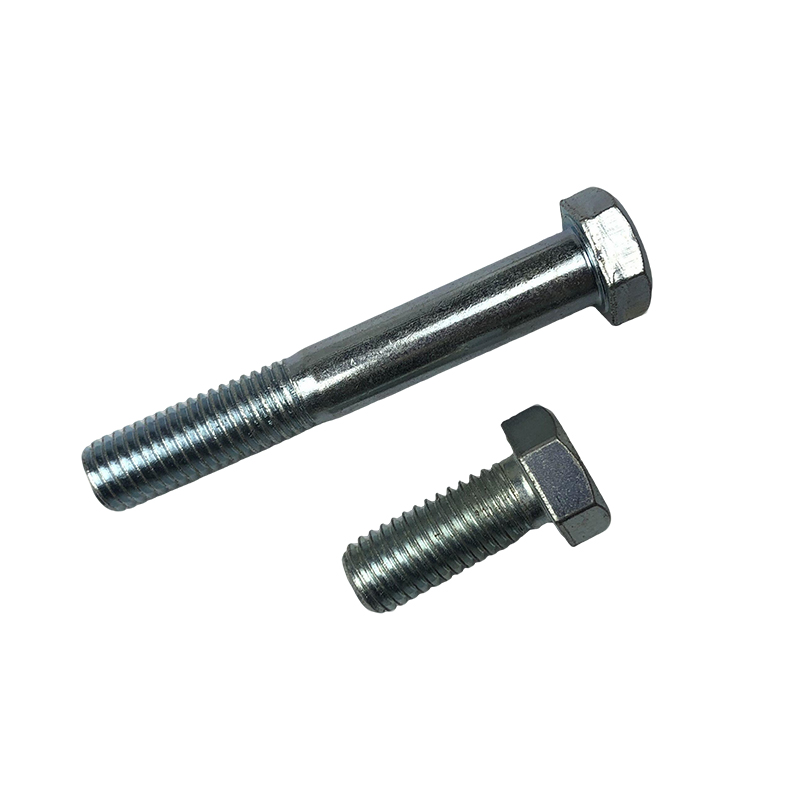 ASME B18.2.1 DIN 933/931 Carbon Steel Hex BoltsStandard industrial hex bolts for machinery, equipment, automotive and structural joints, available in inch and metric carbon steel with multiple coatings.View Product →
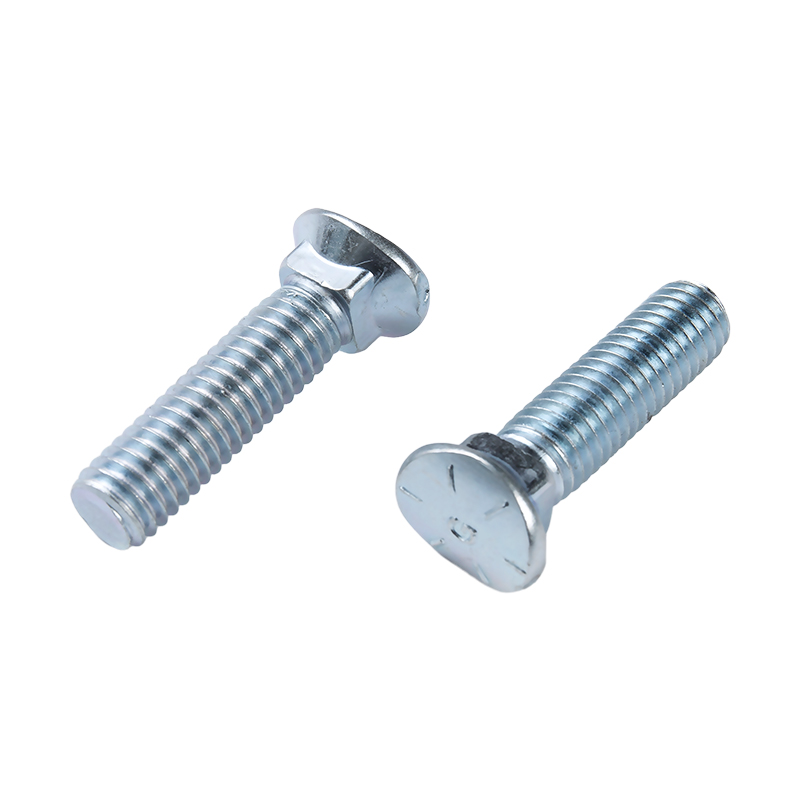
Carriage Bolts, Timber Bolts and Plow Bolts
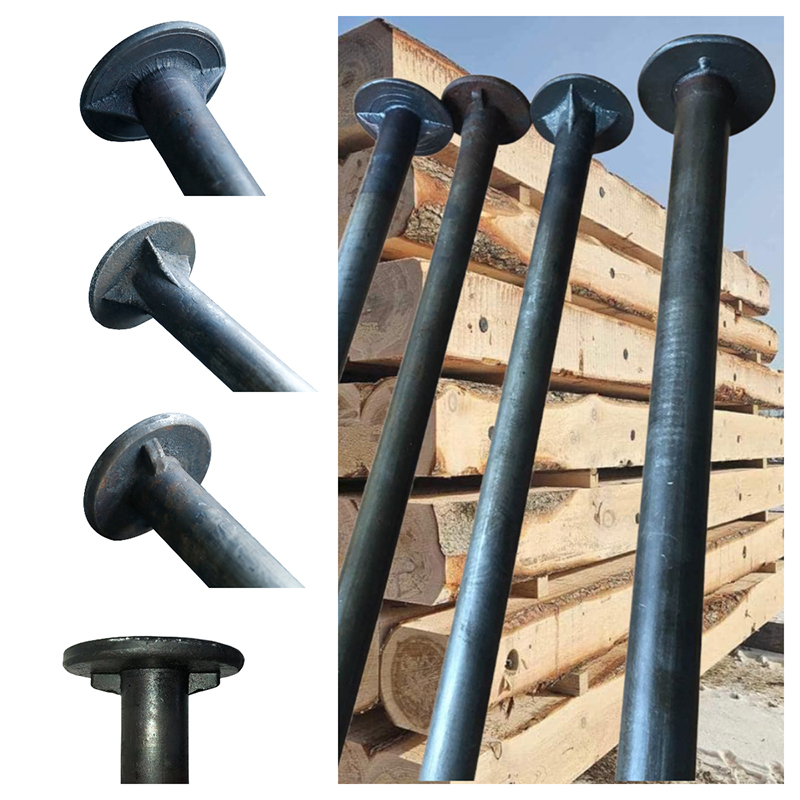
Carriage bolts use a round head and a square neck that bites into timber or a square punched hole, so the bolt cannot spin while the nut is tightened. They are one of the products we are most competitive on, and customers who need them usually want the full picture on round head square neck carriage bolts before they fix a specification. Timber bolts follow a similar logic for heavier timber connections, while plow bolts use a countersunk head that sits flush with the wearing surface of agricultural equipment so it does not catch on soil or crop residue.
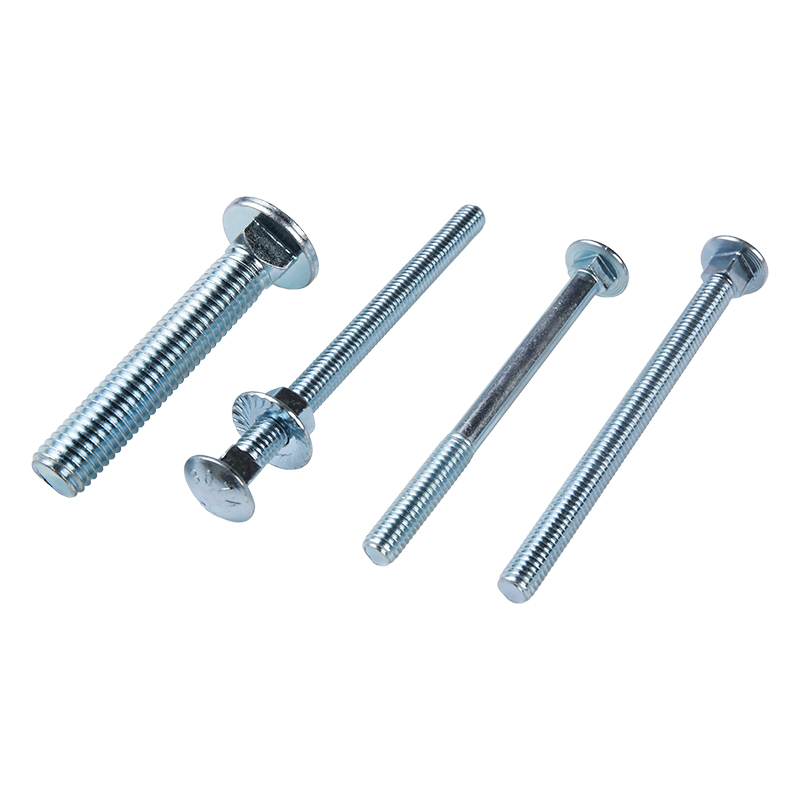 ASME B18.5 DIN603 Round Head Square Neck Carriage BoltsWood fasteners with smooth domed head and square neck that resists turning, suited to fences, decks, gates, timber framing, and construction.View Product →
Bolts Named After the Job They Do
Some bolts are easier to describe by their workplace than by their geometry. Elevator bolts have a wide, flat head that stays put on a conveyor belt or an elevator panel. Silo bolts, which we supply with a colourful plastic cap and a sealing washer, are built for grain and feed storage where a smooth, sealed surface matters. Plow bolts and timber bolts complete a set that reaches into construction hardware, agriculture, material handling and general industry.
Coatings: What Decides Whether a Bolt Lasts
Corrosion is usually what separates a bolt that survives from one that rusts within a season. Plain, lightly oiled carbon steel is the cheapest option and perfectly serviceable inside a dry assembly. Zinc electroplating adds a thin, bright and uniform layer that suits indoor machinery and electrical equipment. Hot-dip galvanizing builds a much heavier zinc coating and is the usual answer for outdoor structures, poles and anything expected to face the weather for years. Mechanical galvanizing delivers a comparable thickness without the heat of the dipping process, and black oxide gives a mild finish with a dark appearance that suits furniture and decorative work.
Coating choice also affects assembly. Zinc layers behave a little like a lubricant, so torque values shift from one finish to another, and a specification that ignores this can leave a joint loose or over-stressed.
Specifications to Confirm Before You Order
Before a quotation means anything, a handful of points need to be settled. We usually ask customers to confirm:
- The standard being followed, such as DIN 931, DIN 933, DIN 6921, IFI or ASME B18.2.1
- Diameter, length, thread pitch, and whether the thread is full or partial
- Property class or grade, together with the required head marking
- Coating type and, where it matters, coating thickness
- Packing, labelling and any special inspection documents
If some of these are still open, it helps to know which ones actually carry weight. We keep a short guide on the grades, coatings and specifications buyers must confirm, and it is worth reading before the first enquiry rather than after the first shipment.
Where Carbon Steel Bolts End Up
Broadly, our bolts go into construction hardware, machinery, machine tools, electrical equipment and furniture. The pattern is easy to see in the product names themselves: tower bolts for structural steelwork, elevator bolts for conveyors, silo bolts for storage, plow bolts for field equipment and timber bolts for wood construction.
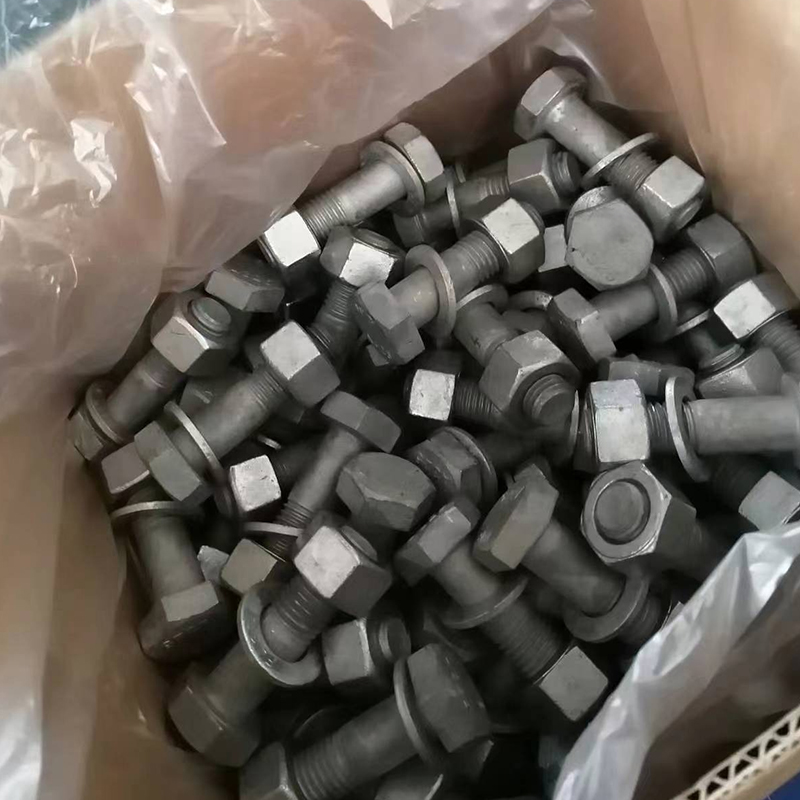
The A394 hex tower bolt is a good example of how a single product can serve one very specific job. Its geometry and heat treatment are aimed at bolted tower and structural joints, where the connection has to keep its clamping force through vibration and weather rather than simply hold a static load in a sheltered workshop.
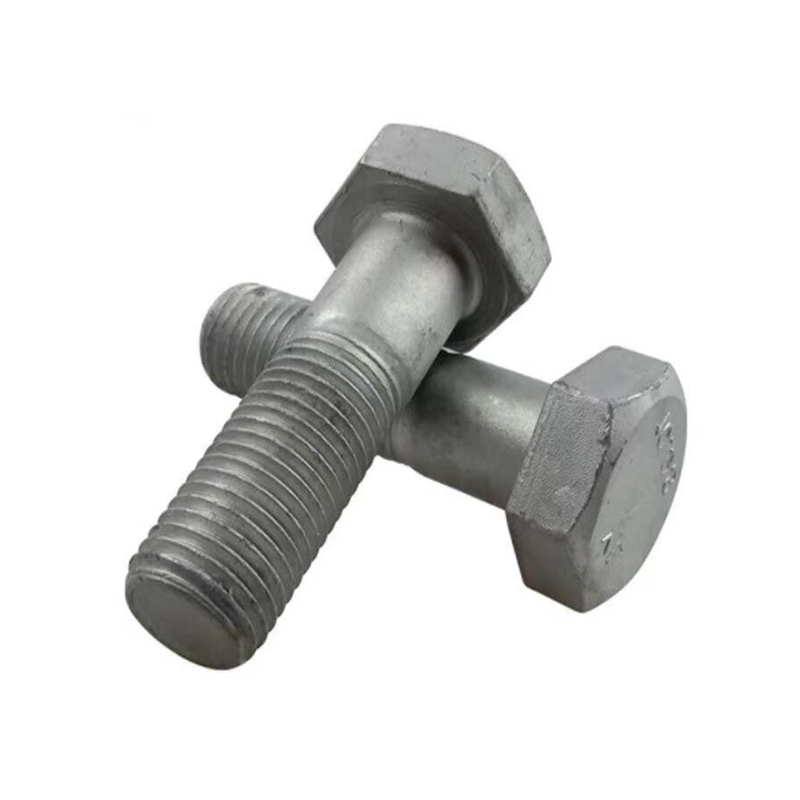 ASTM A394 Hot-Dip Galvanized Hex Tower BoltsCarbon steel hex bolts for steel-to-steel tower, substation, and lattice structure connections, supplied hot-dip galvanized in inch sizes and several grades.View Product →
Quality Control Behind Every Batch
Carbon steel is forgiving, but it is not uniform, and the difference between a good batch and a poor one usually shows up in testing rather than in appearance. We work to ISO 9001 and check both incoming material and finished parts with a salt spray chamber for corrosion resistance, a universal testing machine and a tensile tester for load, a hardness tester, a video measuring system for dimensions and thread geometry, a metallographic microscope for structure, and an optical emission spectrometer to verify chemical composition. The point is not the equipment list itself, but that each batch can be traced back to a reading rather than an opinion.
Working With Us
If you already have a drawing, send it over. We produce to customer-specific designs as readily as to DIN and IFI standards, and most items can be supplied in steel or stainless steel, in imperial or metric sizes. Our production facilities are in Haiyan, Zhejiang and Lianyungang, Jiangsu, and we ship to customers across North America, South America and Europe. If you are not yet sure which grade or coating fits your application, tell us where the bolt will live and what it has to survive, and we will tell you honestly what we would use in that position. You can reach us on 0086-573-86121535, or by fax on 0086-573-86121536.