English
 Español

Industry News
Home / News / Industry News / Carbon Steel Bolts: Grades, Coatings, and Specifications Buyers Must Confirm
Carbon Steel Bolts: Grades, Coatings, and Specifications Buyers Must Confirm
Sep 29, 2026
Content
Carbon steel bolts hold together a surprising amount of the world around us, from the frame of a garden gate to the housing of an electrical appliance. They are strong, affordable, and easy to machine, which is why they remain the default fastening choice across construction hardware, machinery, and furniture. But "carbon steel bolt" is a broad label. It covers everything from a soft, low-carbon carriage bolt to a quenched-and-tempered fastener carrying a structural load. Knowing which one your joint actually needs is the difference between a connection that lasts and one that fails inspection.
We have manufactured bolts and screws since 2004, supplying customers across North America, South America, and Europe. Over that time, one lesson repeats itself: small specification details decide the outcome of large projects. This guide walks through the grades, finishes, sizes, and quality checks that matter most when you select carbon steel bolts.
What Makes a Bolt "Carbon Steel"?
Carbon steel is classified by how much carbon it contains. Low carbon steel holds up to roughly 0.25 percent carbon, medium carbon steel runs from about 0.25 to 0.6 percent, and high carbon steel sits above 0.6 percent. More carbon generally means more strength after heat treatment, but also less ductility and more demanding machining. That trade-off shapes everything about how a bolt performs.
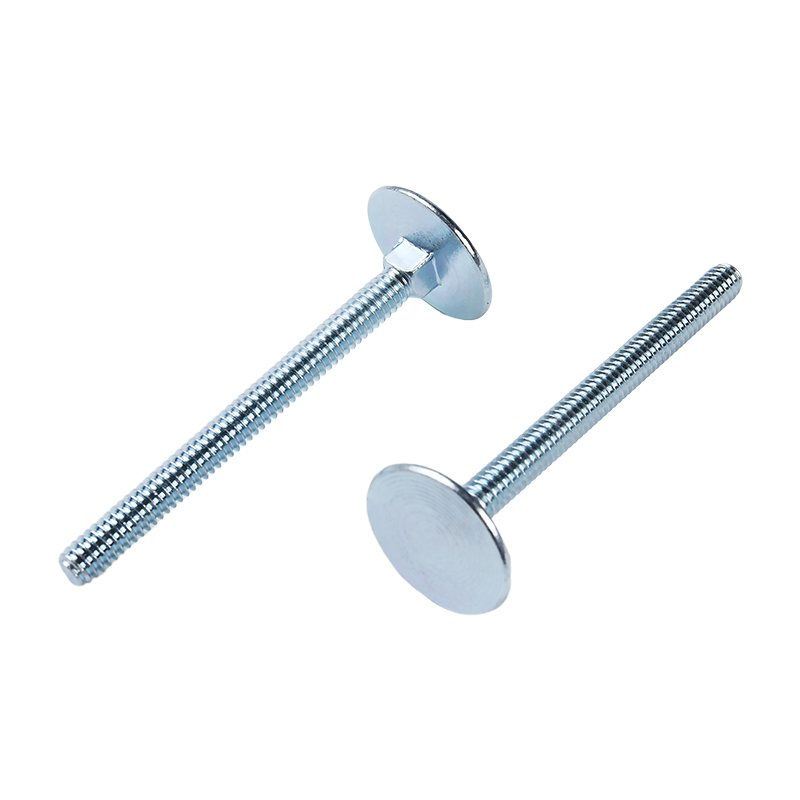
The finished strength of a bolt comes from carbon content combined with heat treatment. A low carbon bolt used as rolled is soft and ductile, easy to form, and perfectly suited to light-duty assemblies. Quenching and tempering medium carbon steel raises strength considerably while keeping enough elongation to absorb shock. Push beyond that level, and alloying elements such as boron, chromium, or manganese become necessary, which is why the highest strength classes are usually described as alloy steel rather than plain carbon steel.
The practical takeaway is simple: never specify strength with the words "carbon steel" alone. Name the grade or property class, and name the standard you want it verified against. That single habit prevents most ordering mistakes we see.
Common Grades and Property Classes at a Glance
Two systems dominate international purchasing. Inch buyers typically reference SAE grades, while metric buyers reference ISO property classes. The table below maps the most common options so you can compare them side by side.
| Grade or Class | Typical core material | Approximate tensile strength | Typical application |
|---|---|---|---|
| Grade 2 / Class 4.6 | Low carbon steel | 400 MPa (about 60 ksi) | General hardware, furniture, light assemblies |
| Class 4.8 | Low carbon steel | 420 MPa (about 60 ksi) | Everyday fastening in mild environments |
| Grade 5 / Class 8.8 | Medium carbon, quenched and tempered | 800 to 830 MPa (about 120 ksi) | Machinery, machine tools, structural brackets |
| Grade 8 / Class 10.9 | Alloy steel, quenched and tempered | 1040 MPa (about 150 ksi) | High-load joints, heavy equipment |
| Class 12.9 | Alloy steel, quenched and tempered | 1220 MPa (about 177 ksi) | Compact high-strength connections |
Notice how quickly the required material changes as strength rises. If your design sits near a boundary, confirm the class with your supplier before the order is released, because the heat treatment and the coating both need to be planned around it.
Choosing a Coating Before You Choose a Bolt
Carbon steel will rust when unprotected, so the finish is not a cosmetic afterthought. It determines how long the bolt survives its environment and, in high-strength applications, whether hydrogen embrittlement becomes a risk. The table below summarizes the finishes we produce most often.
| Finish | Typical coating thickness | Best suited to | Appearance |
|---|---|---|---|
| Zinc electroplating | 5 to 12 microns | Indoor assemblies and mild outdoor exposure | Bright silver, blue, or yellow tint |
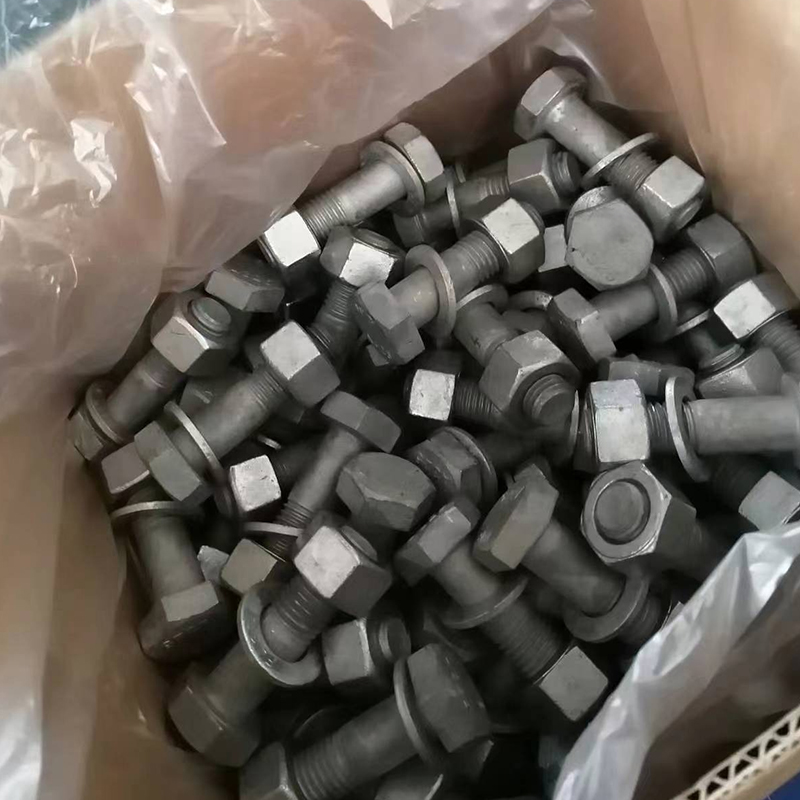
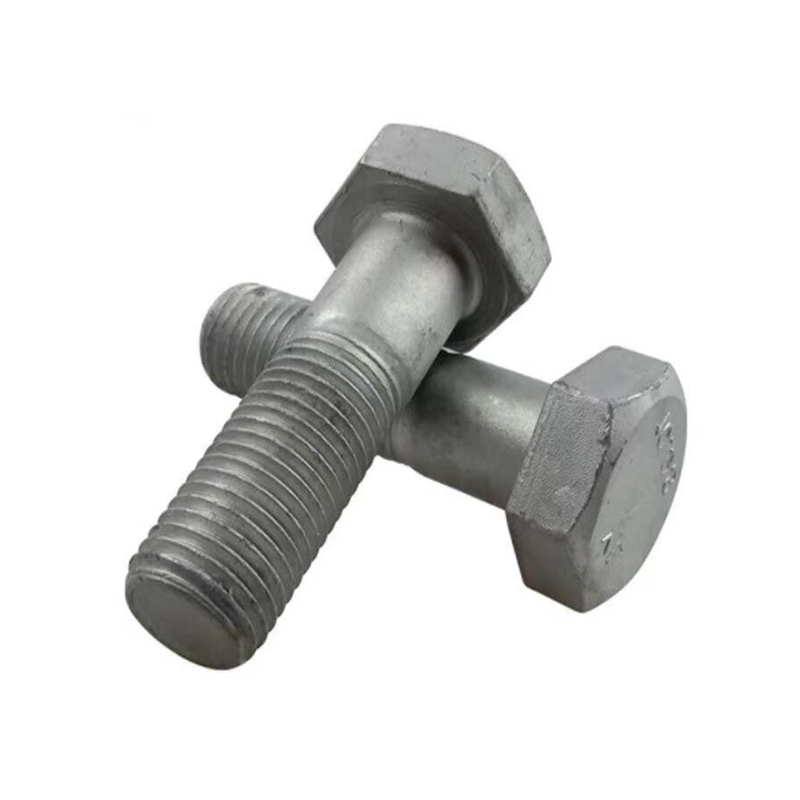
| Hot dip galvanizing | 45 to 85 microns | Outdoor, coastal, and industrial environments | Dull grey, slightly thicker threads |
| Zinc flake coating | 8 to 12 microns | High-strength fasteners where embrittlement risk matters | Matte grey or black |
| Black oxide | Under 1 micron | Machinery and tooling in dry, oiled conditions | Uniform black |
| Plain, lightly oiled | None | Assemblies that will be painted or used indoors | Bare steel |
If a project calls for salt spray resistance, give us the target hours and the test method. We can then recommend a finish and confirm it with our salt spray test chamber rather than guessing.
Size, Thread, and Standard Details
Our bolt production covers diameters from 3/16 inch to 1 1/2 inch, or 5 mm to 52 mm, and lengths from 1/2 inch to 60 inches, or 10 mm to 1500 mm. Both inch and metric dimensions are available, so a single order can mix systems when a project requires it.
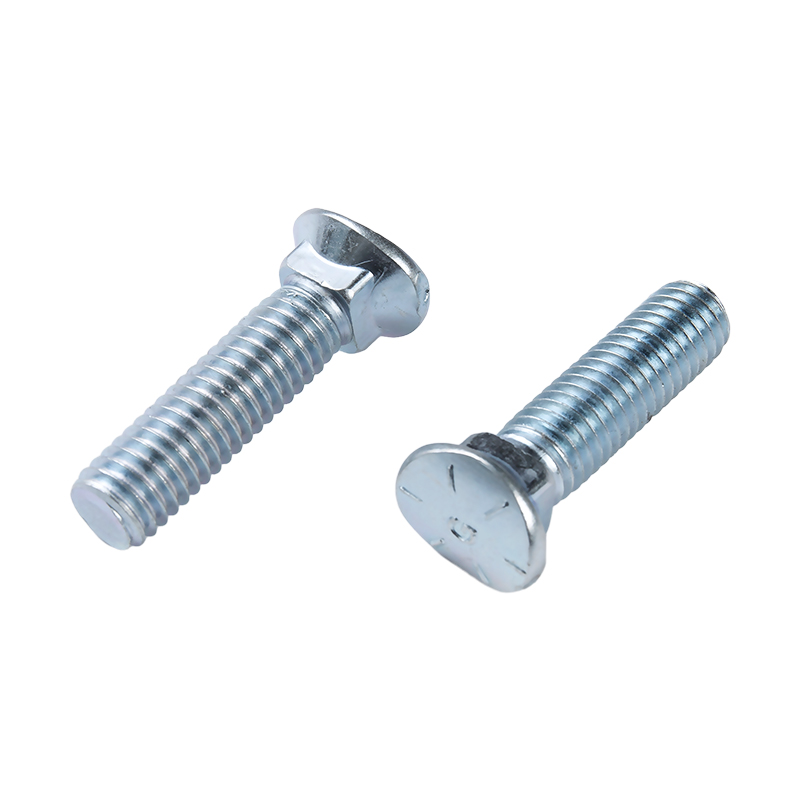
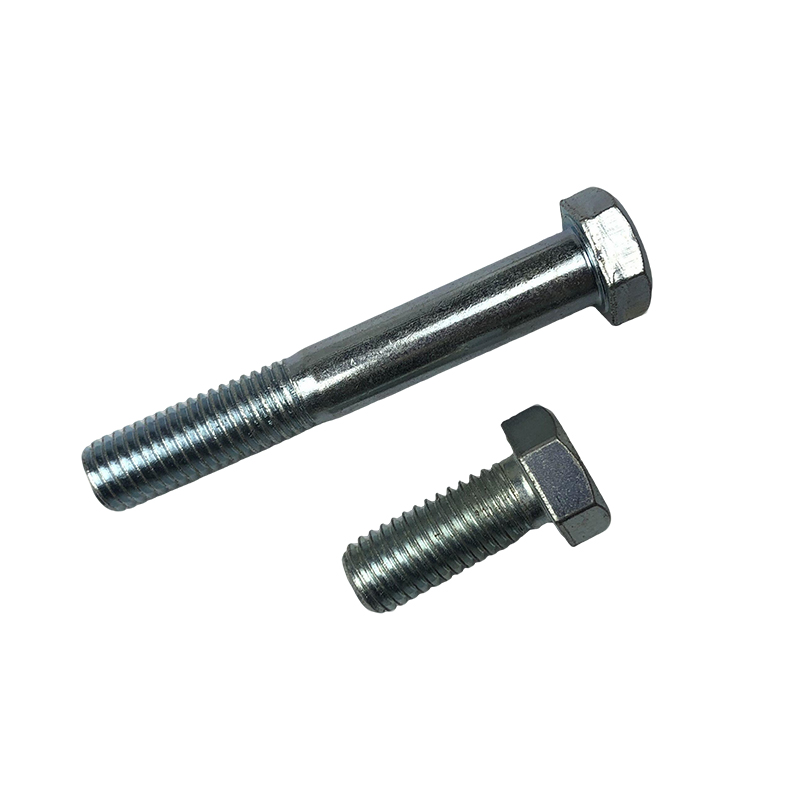
Thread type deserves the same attention as diameter. Unified coarse and unified fine threads, plus metric coarse and fine pitches, all behave differently in torque and vibration resistance. Head style matters too: hex, carriage, and round head bolts each suit a different assembly method and appearance requirement.
Standards complete the picture. We manufacture to DIN and IFI specifications, and we can work to other recognized standards when drawings call for them. Most of our products are available in steel and stainless steel, which gives buyers a straightforward way to compare a carbon steel option against a corrosion-resistant alternative on the same drawing.
Where Carbon Steel Bolts Perform Best
Carbon steel earns its place in applications where strength per unit of cost matters and where the environment can be managed with a sensible finish.
- Construction hardware: carriage bolts and round head bolts are among our most competitive products, favored for their smooth heads and strong clamping action.
- Machinery and machine tools: medium carbon grades absorb vibration and hold preload in frames, guards, and mounts.
- Electrical appliances: small diameter bolts keep housings and internal brackets secure without adding weight.
- Furniture: low carbon and lightly coated bolts deliver clean appearance and dependable assembly at volume.
Our corrosion-resistant construction screws address the same logic on the screw side, where moisture exposure is a constant concern. For bolts, matching the grade to the load and the coating to the climate remains the most reliable formula.
The Quality Checks Behind Every Shipment
Strength claims only mean something when they are verified. Our facility holds ISO 9001 certification, and our quality control laboratory is equipped to test the properties that customers care about most.
- Optical emission spectrometer: confirms the chemical composition of each heat of steel.
- Universal testing machine and tensile testing machine: measure tensile strength, yield, and elongation.
- Hardness tester: checks that heat treatment reached the intended level.
- Salt spray test chamber: validates coating performance over time.
- Video measuring system: verifies dimensions, thread pitch, and head geometry.
- Metallographic microscope: examines microstructure for defects and decarburization.
Together, these checks support one goal we hold ourselves to: every product meeting the customer's standards for strength, durability, and reliability. If you need inspection reports with your shipment, tell us at the quotation stage so the test plan can be built into the schedule.
Ordering: Standard Products or Custom Drawings
Standard bolts
If your requirement matches a common DIN or IFI specification, a standard bolt is usually the fastest and most economical route. Send the standard number, grade, diameter, length, thread, and finish, and we can quote quickly.
Custom engineered bolts
When a design calls for a specific head shape, shoulder length, material, or coating combination, we manufacture to your drawings and specifications. Sharing the drawing, the annual volume, and any testing requirement up front helps us confirm feasibility and lead time in one pass.
Production runs at our facilities in Haiyan, Zhejiang, and Lianyungang, Jiangsu, and our export experience covers North America, South America, and Europe. Because we handle both inch and metric work, mixed-system projects do not need to be split across suppliers.
Carbon steel bolts are not a commodity to be ordered by habit. The grade decides how much load the joint can carry, the coating decides how long it will last, and the quality checks decide whether either promise holds in the field. Get those three elements right, and a modest fastener becomes a dependable part of the assembly for years.
If you are planning a purchase and would like a second opinion on grade selection or finish, our team is glad to review your drawings and specifications. Send them over with the quantities you expect, and we will come back with a clear, practical recommendation.