English
 Español


Industry News
Home / News / Industry News / A307 Grade A Timber Bolts: Specifications, Sizing, Coatings and Sourcing Guide
A307 Grade A Timber Bolts: Specifications, Sizing, Coatings and Sourcing Guide
Nov 05, 2026
Content
Timber bolts rarely get much attention until something works loose. After more than two decades of supplying fasteners to builders, fabricators and hardware distributors, we have learned that most problems in wood-to-wood connections come down to two things: bolt geometry that does not suit the timber, and a grade nobody clearly explained to the person who bought it. A307 Grade A is the quiet workhorse behind a large share of the timber bolts sold into North American jobsites, and it is worth understanding exactly what it does — and does not — promise.
This short guide walks through the specification, the shape of the bolt, the way sizes are measured, and the coating choices that decide whether a dock or a barn frame is still tight ten winters from now.
What A307 Grade A Actually Promises
A307 is an ASTM specification covering low-carbon steel bolts, and Grade A is its general-purpose tier. It is written around mechanical properties — tensile strength, yield, elongation and hardness — rather than a tightly fixed chemistry, which is why A307 Grade A bolts can be produced economically in large volumes while still behaving predictably in service.
Three practical points matter more than the numbers themselves. First, Grade A is ductile. It bends and yields before it snaps, which is exactly the behavior you want in a joint that will shrink, swell and move with the seasons. Second, it is not a high-strength structural bolt. It is not intended for pretensioned steel-to-steel connections, and no amount of tightening will turn it into one. Third, it is not rated for elevated-temperature service. Keep those boundaries in mind and Grade A will serve you well for decades.
| Property | Typical requirement |
|---|---|
| Minimum tensile strength | 60,000 psi (414 MPa) |
| Minimum yield point | 36,000 psi (248 MPa) |
| Minimum elongation | 18% in 2 in. |
| Common diameters | 1/4 in. through 1-1/2 in. |
| Thread form | Unified coarse (UNC), Class 2A |
| Matching nut | A563 Grade A hex or square nut |
| Matching washer | F844 plain washer or malleable timber washer |
| Common finishes | Plain, zinc plated, hot-dip galvanized (A153) |
The Anatomy of a Timber Bolt
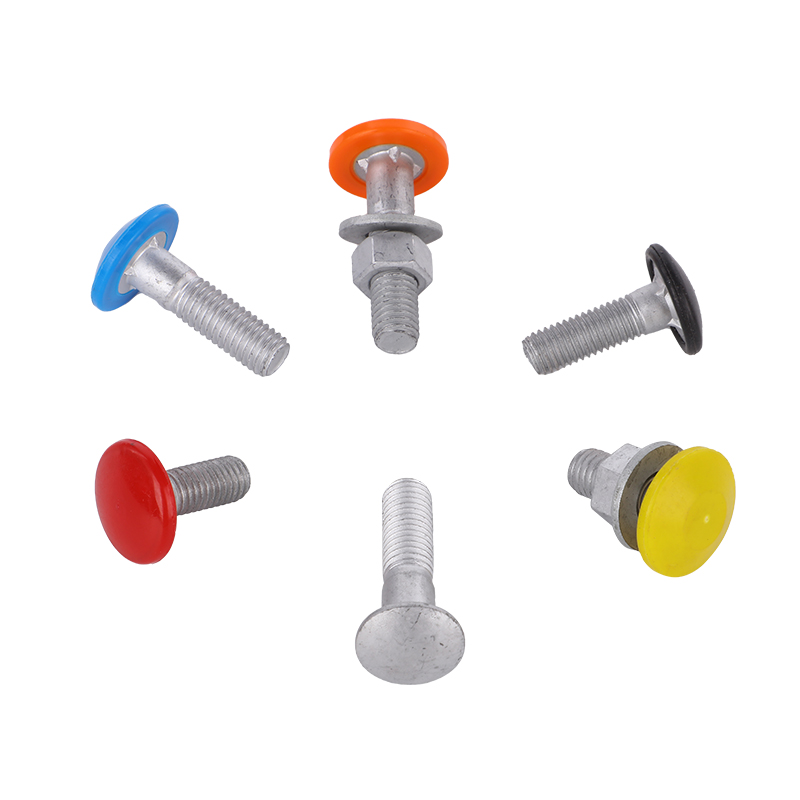
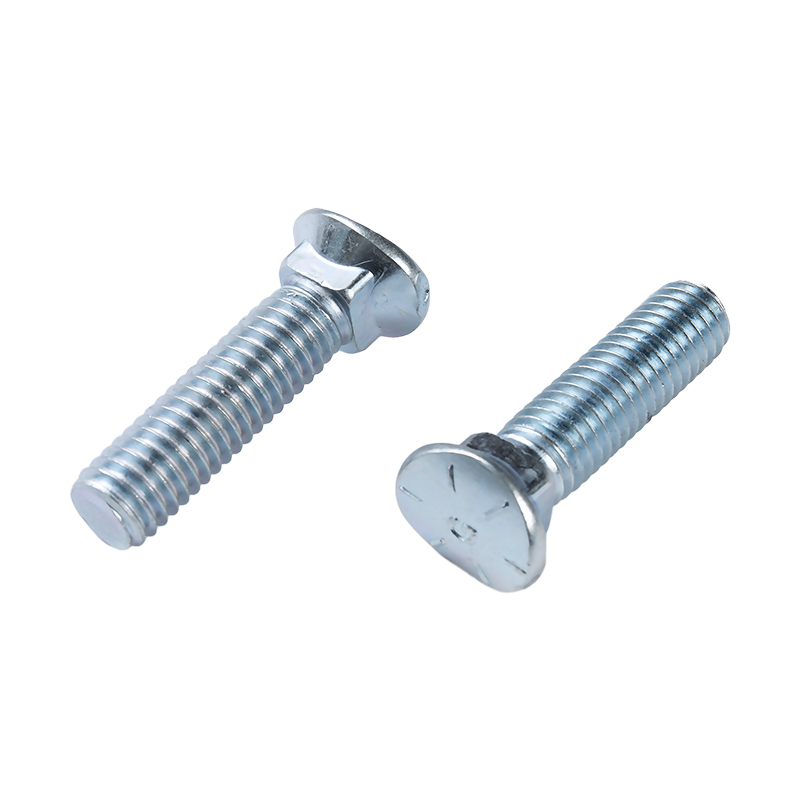
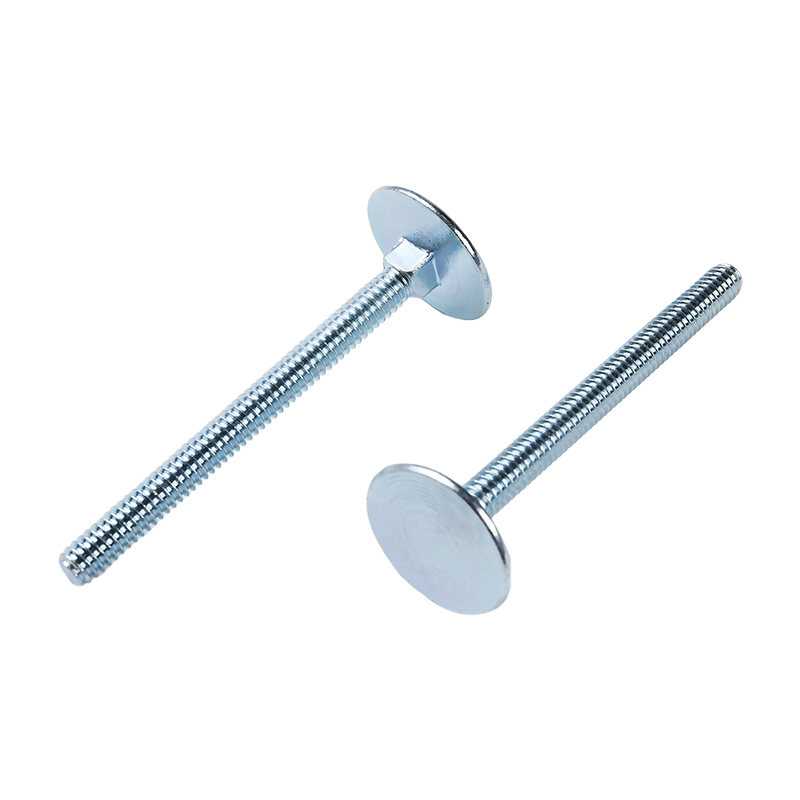
Ask for a timber bolt and you will usually receive a fastener with three distinguishing features: a large head, a square neck just beneath it, and a square nut. The head may be a smooth dome, a hex, or a flat countersunk style, depending on the look the job calls for. On a deck or a pergola, the dome head is popular because it caps the end of the hole neatly and leaves nothing to snag a hand or a fishing line.
The square neck does the real work
When the bolt is driven into a pre-bored hole, the square neck bites into the wood fiber. That interference stops the shank from spinning, so one person can tighten the nut from the far side without a wrench on the head. It also means the bolt is keyed to the timber rather than relying on friction alone — a small detail that saves a great deal of time on a scaffold.
Nuts and washers
A square nut gives you a broader, flatter bearing face and a better grip with an adjustable wrench in awkward spots. Underneath, a malleable or wrought washer spreads the clamping load across the softwood surface, which is what actually prevents the nut from crushing into the grain over time. Skipping the washer is the single most common cause of a loose connection we see in the field.
Our own
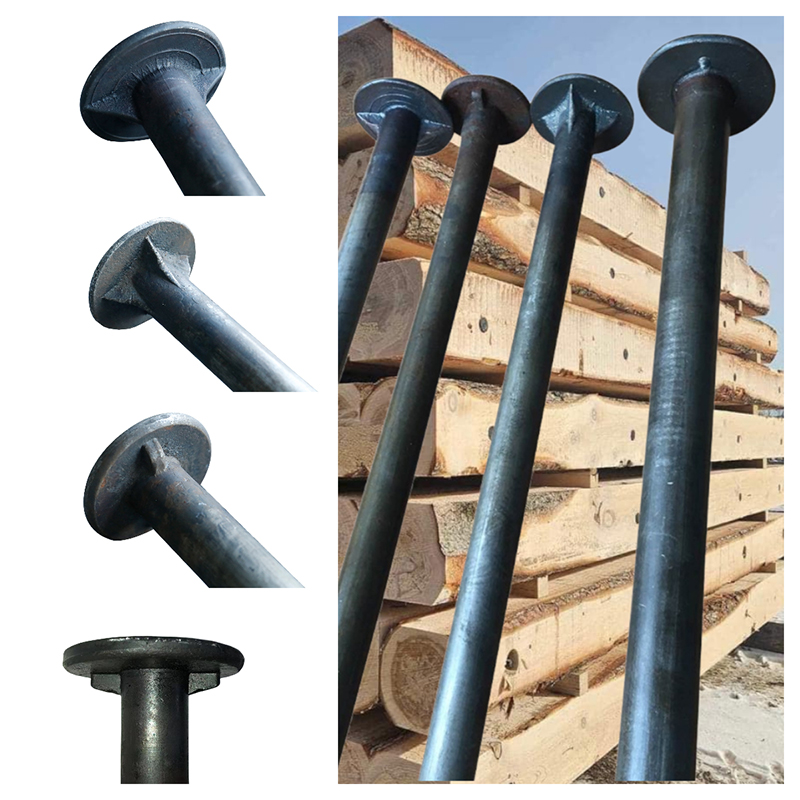 A307 Grade A Dome-Head Timber BoltsEconomy carbon steel timber bolts with anti-rotation fins, dome or flat heads, sizes to 1 1/2 in and plain or galvanized finishes.View Product →
timber bolts follow this pattern, with the neck depth and head diameter matched to the shank so the bolt seats squarely instead of wallowing in the hole.
Sizing: Diameter, Length and Hole
Diameter follows load and timber section. In general terms, 1/2 in. and 5/8 in. bolts suit 4x4 and 6x6 members, 3/4 in. is the usual choice for heavier built-up beams and 1 in. for marine piles and large cribbing. When in doubt, go up one size rather than adding more small bolts — fewer, larger fasteners usually clamp a joint better than a cluster of thin ones.
Length is measured from under the head to the end of the bolt, and the dome itself is not counted. A simple working formula: total thickness of all members, plus the washer, plus the nut, plus roughly 1/4 in. of thread showing past the nut. Cutting it too fine is a common mistake — an extra half inch costs almost nothing and saves a return trip.
Hole and edge distances
- Bore a clearance hole about 1/16 in. larger than the bolt diameter.
- Pre-drill hardwoods and dense treated species to avoid splitting.
- Keep end distance generous — at least 1-1/2 times the bolt diameter — and avoid placing two bolts in line with the grain.
If you want a broader comparison of shank, thread and head options before you settle on a drawing, our guide to timber bolt types, sizes and materials goes deeper into the trade-offs.
Coatings That Survive Real Weather
Plain, lightly oiled bolts are fine indoors. The moment a connection sees rain, the finish becomes the deciding factor in service life.
- Zinc plated: adequate for sheltered exterior work and interior framing; not a long-term outdoor coating.
- Hot-dip galvanized to A153: the standard choice for docks, boardwalks, retaining walls and anything exposed. Expect a heavier zinc layer, and expect to use oversize-tapped nuts, since the coating adds thickness to the threads.
- Stainless steel: worth the premium in coastal salt air and around chemically treated lumber. Isolate stainless from galvanized steel with a nylon washer where the two meet to avoid galvanic trouble.
One field note worth repeating: modern copper-based pressure treatments are far more aggressive toward zinc than the old CCA chemistry. On treated timber that stays wet, specify hot-dip galvanizing or stainless rather than electroplated zinc.
Where They Belong, and Where They Don't
A307 Grade A timber bolts are at home in barn frames, pole barns, deck ledgers, boardwalks, timber retaining walls, garden structures, playground equipment and laminated beam assemblies. They also work well for fixing timber to steel brackets, where the bolt passes through a pre-drilled plate and clamps from the wood side.
They are the wrong choice for pretensioned structural steel connections, overhead lifting equipment, high-temperature service, or any joint where an engineer has specified a high-strength bolt and a calculated clamp load. In those cases the correct answer is a different specification entirely, and we will say so rather than ship something that merely looks the part.
Where a smooth, low-profile head is preferred on thinner members, a
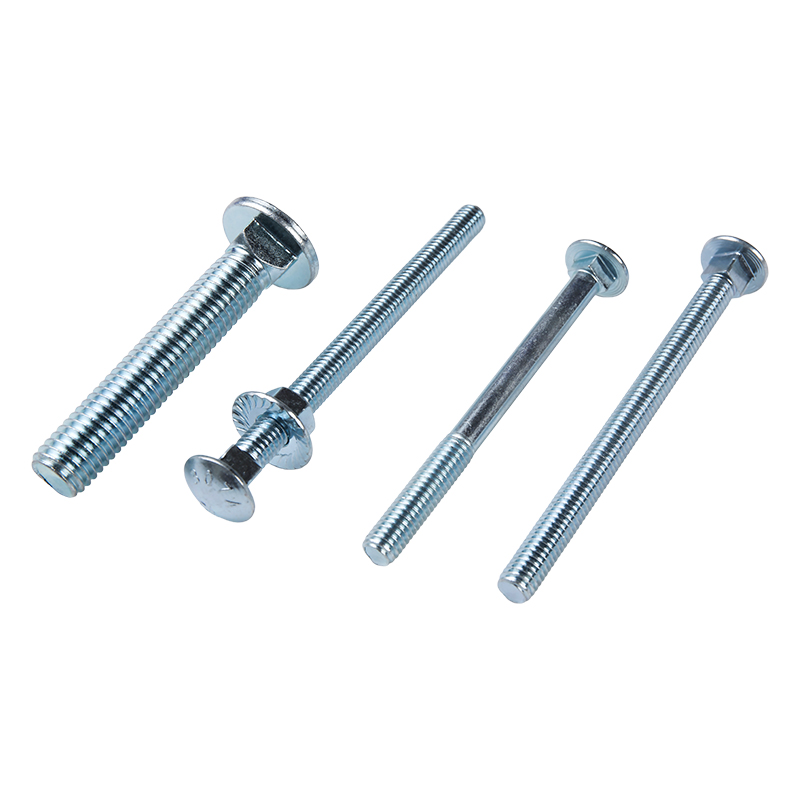 Carbon and Stainless Steel Carriage BoltsRound-head, square-neck bolts for wood connections, available in carbon or stainless steel, multiple standards, sizes and coatings.View Product →
carriage bolt with its square-neck shoulder does a similar job at a lighter weight.
What We Check Before a Bolt Ships
Our plants in Haiyan and Lianyungang operate under ISO 9001, and the laboratory side of the business is where a specification stops being paperwork. Salt spray cabinets track coating performance over time. A universal testing machine and a dedicated tensile frame confirm breaking load and elongation. Hardness testing catches heat-treatment drift before it becomes a failure. A video measuring system and micrometers verify shank diameter, head size, neck geometry and thread pitch, while optical emission spectroscopy confirms the raw material chemistry on incoming steel.
For buyers, the practical takeaway is to ask for dimensional and mechanical reports with the shipment, and to state the standard edition and coating weight on the purchase order. Ambiguity at that stage is where most disputes begin.
Ordering Notes
We produce to both inch and metric dimensions, in diameters from 3/16 in. to 1-1/2 in. (5 mm to 52 mm) and lengths from 1/2 in. to 60 in. (10 mm to 1500 mm), in carbon steel and stainless. Standard product can follow DIN or IFI practice, and custom work is built from your drawing — a non-standard neck depth, a particular head radius, a specific thread length or a matched nut and washer set.
If your design calls for a hex head rather than a dome, the same Grade A material runs through our
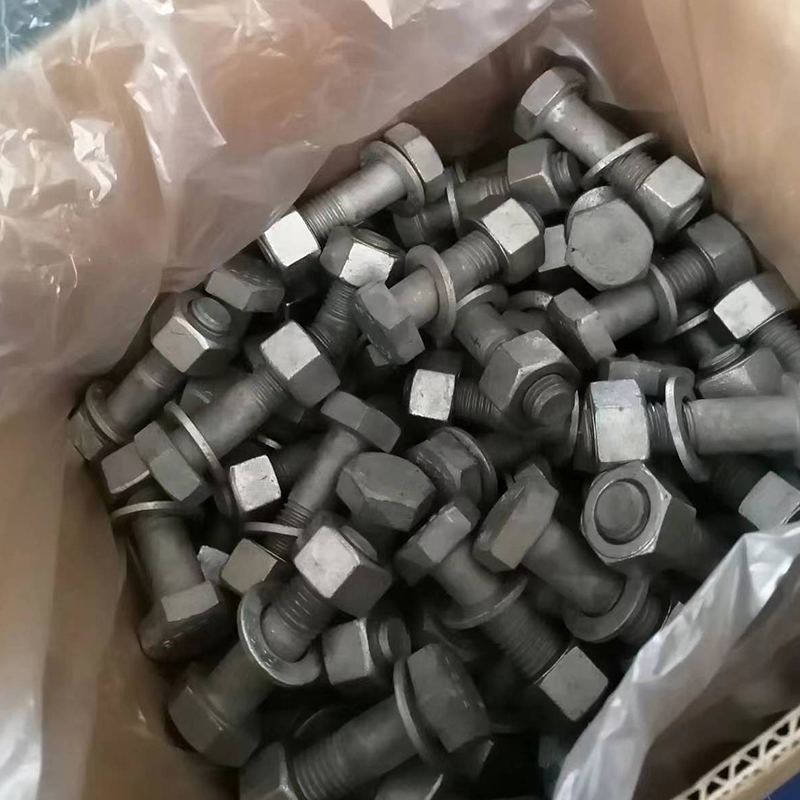
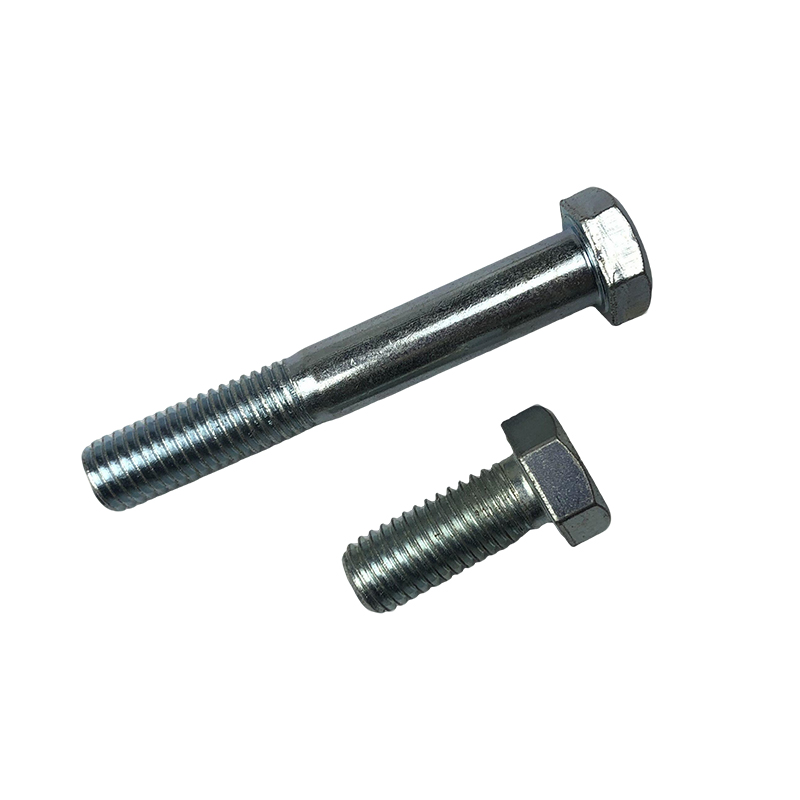 ASME B18.2.1 Carbon Steel Hex BoltsGeneral-purpose hex-head fasteners in full- or partial-thread patterns, A307A and other grades, inch and metric sizes, plain or coated.View Product →
hex bolt range, and you can browse the wider bolt and screw catalogue for nuts, washers, threaded rods and studs to complete the assembly.
Choosing a timber bolt is not complicated, but it is easy to get slightly wrong — an undersized shank, a missing washer, a zinc coating asked to survive a saltwater dock. A307 Grade A remains the sensible default for general wood connections, provided everyone agrees on the grade, the geometry and the finish before the first carton is packed. If you are weighing options for a particular job, send the drawing or the application details and we will tell you honestly whether Grade A fits or whether something else should carry the load.