English
 Español


Industry News
Home / News / Industry News / A307 Grade A Timber Bolts: Properties, Coatings and Selection Checklist
A307 Grade A Timber Bolts: Properties, Coatings and Selection Checklist
Nov 12, 2026
Content
- 1 What ASTM A307 Grade A Really Covers
- 2 Why Grade A Pairs So Well With Timber
- 3 Choosing the Head Style: Timber Bolts, Hex, or Carriage
- 4 Coatings Matter More Than Most Buyers Expect
- 5 Sizes, Threads, and the Hardware That Travels With Them
- 6 A Short Specification Checklist
- 7 How We Help With A307 Grade A Timber Bolts
Anyone who has spent a few seasons bolting up decks, barns, or equipment frames knows the feeling: the hardware is the cheapest part of the job, and yet it is the part that decides whether the assembly still feels tight five winters later. A307 Grade A timber bolts sit right in that gap between "ordinary" and "important," which is why they come up so often in conversations with fabricators, lumber yards, and contractors.
This short guide walks through what the A307 Grade A designation actually covers, why it suits wood-to-wood and wood-to-steel work so well, how head styles and coatings change the outcome, and what to put on a purchase order so the bolts that arrive are the bolts you designed around.
What ASTM A307 Grade A Really Covers
ASTM A307 is the long-standing specification for carbon steel bolts and studs in diameters from 1/4 inch through 4 inches. It is a general-purpose document, and it is divided into three grades that behave quite differently once they leave the box.
| Grade | Typical form | Minimum tensile strength | Usual role |
|---|---|---|---|
| A | Hex head, square head, timber bolts | 60 ksi | General fastening of wood, cast iron, and light steel assemblies |
| B | Heavy hex | 60 to 100 ksi | Flanged joints on piping, valves, and fittings |
| C | Heavy hex | 58 to 80 ksi through 1-1/2 in | Structural steel joints, including weathering steel work |
Grade A is the one most timber projects end up using. It is a low-carbon, coarse-thread (UNC) bolt with a 60 ksi minimum tensile strength, made to the dimensions of ASME B18.2.1 with threads per ASME B1.1. The chemistry stays deliberately lean, with carbon capped around 0.29 percent in the smaller sizes, and that softness is a feature rather than a compromise.
Two boundaries are worth remembering. A307 is not intended for high-pressure or high-temperature service, and it is not a substitute for a quenched-and-tempered structural grade when a steel-to-steel connection is designed around bolt strength. In wood, that distinction rarely comes into play, for reasons covered next.
Why Grade A Pairs So Well With Timber
In a bolted wood connection, the wood almost always governs. The bolt bears against the fibers of the side member, and the connection capacity comes from species, grain direction, side-member thickness, and geometry far more than from the strength of the steel. Upgrading to a higher-strength bolt in that situation buys very little, because the wood will crush or split long before the shank reaches its limit.
Ductility Is Doing Real Work
Low-carbon A307 Grade A bolts stretch before they break. That ductility gives a connection warning instead of a sudden failure, and it allows load to redistribute across a group of bolts rather than concentrating on the stiffest one. For deck ledgers, pole barn purlins, guardrail posts, and machine bases bolted to sleepers, this forgiving behavior is exactly what a designer wants.
Design Still Comes First
Grade A is not a license to guess. Lateral values for a bolt in wood depend on diameter, penetration, end and edge distance, and load duration, and they are normally taken from the National Design Specification or an equivalent local code. Keep the unthreaded shank in the shear plane where the design assumes it, and check whether your reference table applies a reduction when threads fall inside the joint plane.
Choosing the Head Style: Timber Bolts, Hex, or Carriage
"Timber bolt" gets used loosely, but the classic article is a distinct product. It has a large, rounded or dome-shaped head, a square neck that bites into the wood to stop rotation, and a square nut. Because the neck locks into the timber, one person can tighten the nut from a single side without a wrench on the head, and the broad head spreads bearing pressure over a wider patch of wood.
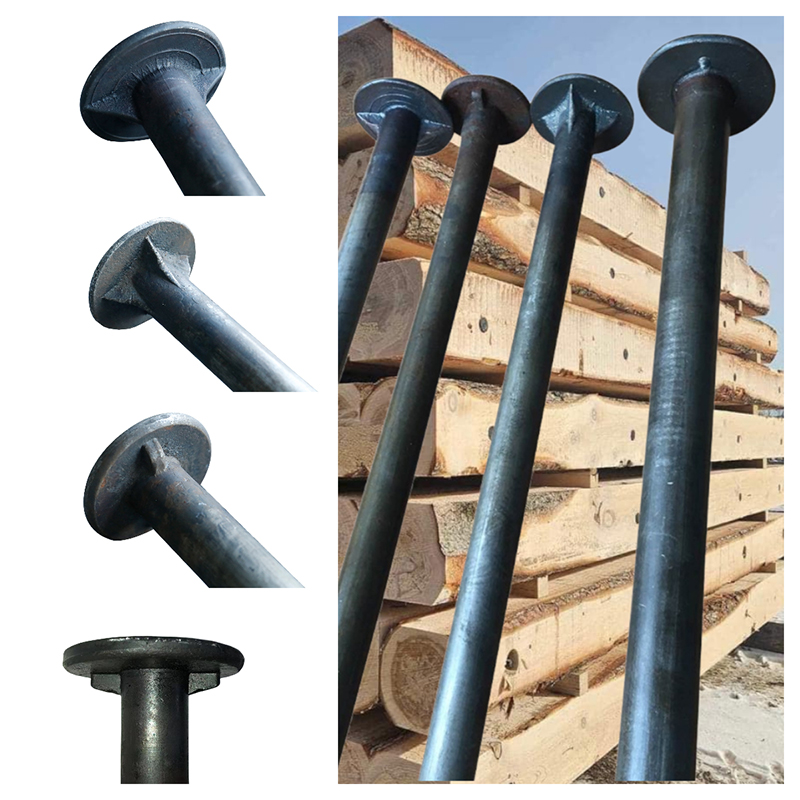 A307 Grade A Timber Bolts with Dome or Flat HeadEconomy carbon steel timber bolts with nubs under the head to resist turning, offered plain or hot-dip galvanized for wood and marine connections.View Product →
Hex head A307 bolts are the everyday alternative and the easier choice to specify when standard hardware and predictable wrench clearances matter. They need a properly sized washer under both the head and the nut to spread load, especially in softer species. Carriage bolts take a third path: a smooth round head and square neck, no visible socket on the finished face, which makes them a favorite for dock framing, playground structures, and timber that will be seen.
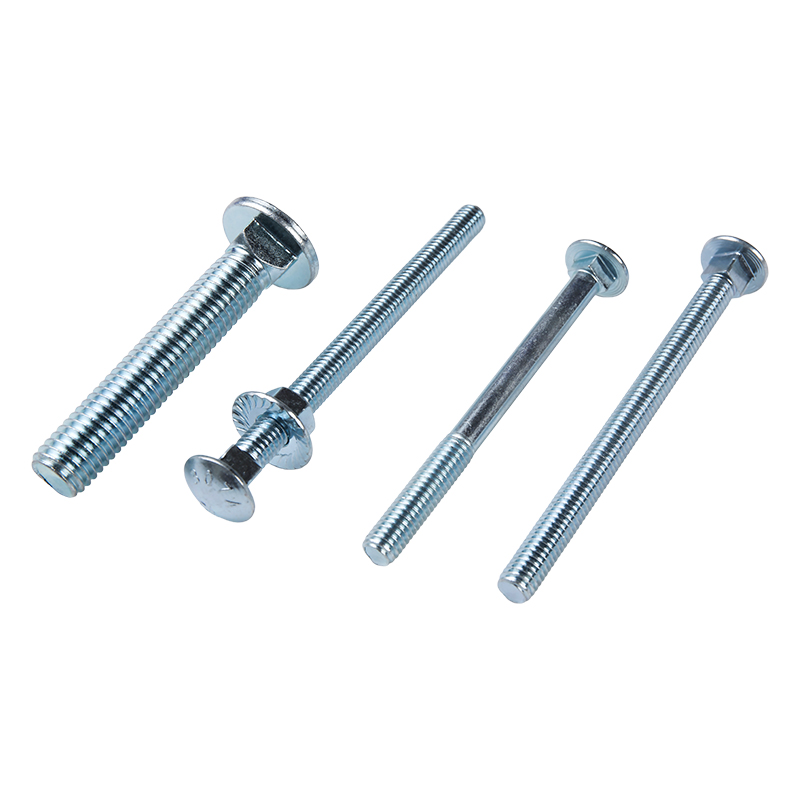 Round Head Square Neck Carriage Bolts in Carbon or Stainless SteelCarriage bolts with a square neck that grips wood during tightening, available in multiple standards, grades, sizes, and coatings for fences, decks, and timber framing.View Product →
If you are still weighing shapes, sizes, and material options, our guide to timber bolt types, sizes, and materials goes deeper into the trade-offs.
Coatings Matter More Than Most Buyers Expect
Modern pressure-treated lumber is often copper-based, and those chemistries are noticeably aggressive toward plain steel. The finish you pick should match the exposure, the treatment, and the intended service life.
| Finish | Best suited to | What to watch |
|---|---|---|
| Plain (black) | Dry, sheltered, interior assemblies | Flares up with rust once exposed to moisture |
| Electroplated zinc | Indoor components and dry service | Thin coating with limited outdoor life |
| Hot-dip galvanized | Treated lumber, decks, exterior structures | Coating adds thickness; use over-tapped nuts |
| Stainless steel | Coastal, marine, and chemically harsh sites | Higher cost and a different strength basis |
When hot-dip galvanizing is called out, reference ASTM F2329 for the coating on the bolt and plan for the extra thickness at the threads. Chasing a galvanized nut onto a galvanized bolt without an over-tap is a fast route to a stripped thread and a frustrated crew.
Sizes, Threads, and the Hardware That Travels With Them
A307 Grade A bolts run from 1/4 inch up to 4 inches in diameter, with lengths to suit the assembly. In practice, most timber work lands between 1/2 inch and 1 inch. A few habits keep the package consistent:
- Match the nut to the bolt. A563 Grade A hex nuts are the usual pairing; higher-grade nuts are acceptable but do not raise the capacity of the assembly.
- Specify washers explicitly. F844 washers are the standard companion, and timber connections frequently call for larger plate washers to spread bearing pressure.
- State the thread length. A partially threaded bolt that leaves the shank in the shear plane behaves differently from a fully threaded one.
- Confirm the dimensional standard and the coating spec on the drawing, not just the grade name.
Washers are the most commonly forgotten item on a timber order, and they are also the cheapest way to protect the wood from crushing. Our washer range covers the standard and heavier patterns that pair with these bolts.
A Short Specification Checklist
- Name the standard and grade together: ASTM A307 Grade A, not just "A307."
- Give diameter, length, thread length, and the dimensional standard for the head.
- Choose the head style based on access: timber bolt or carriage bolt for one-side tightening, hex where clearance allows.
- Select a coating that matches the lumber treatment and the exposure.
- List nuts and washers on the same order so nothing arrives missing.
- Define inspection expectations, including whether mill or test certificates are required.
- Allow for moisture movement in the wood, and plan a re-tightening visit after the structure has dried.
How We Help With A307 Grade A Timber Bolts
Jiaxing Sini Fastener has been making bolts and screws since 2004, and much of what we ship goes into exactly this kind of work: building hardware, machinery, electrical assemblies, and furniture frames for customers across North America, South America, and Europe. We run production in Haiyan, Zhejiang, and Lianyungang, Jiangsu, under an ISO 9001 quality system, with in-house salt spray, tensile, hardness, optical emission, and dimensional checks supporting each lot.
Standard product is only part of the story. We produce to DIN and IFI requirements, work in both inch and metric sizes, and offer carbon steel or stainless depending on the environment. When a drawing calls for a non-standard head, an unusual length, or a specific thread configuration, we build to the customer's design rather than asking the design to fit our catalog.
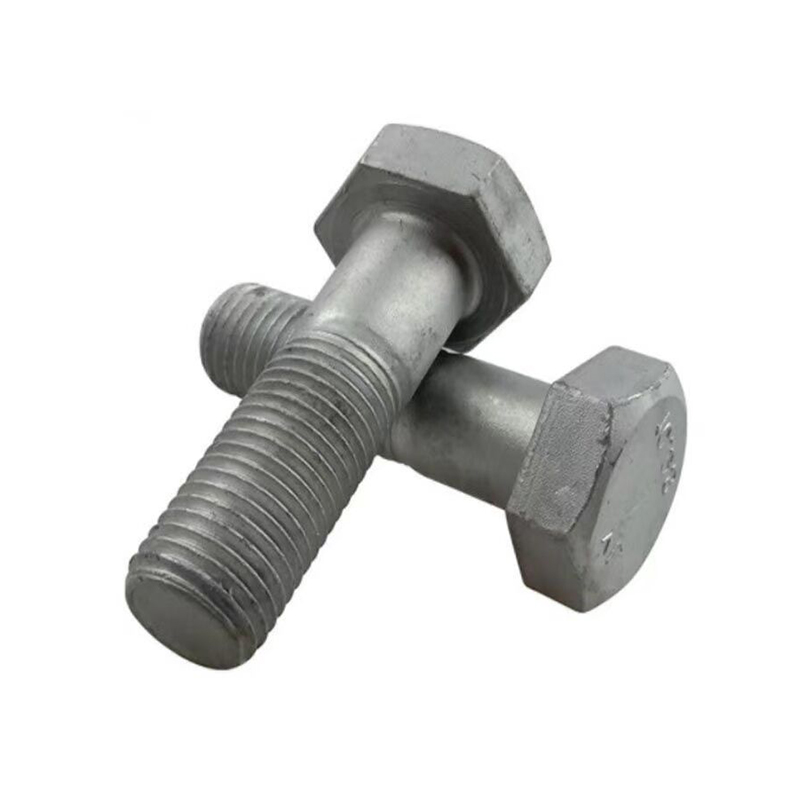
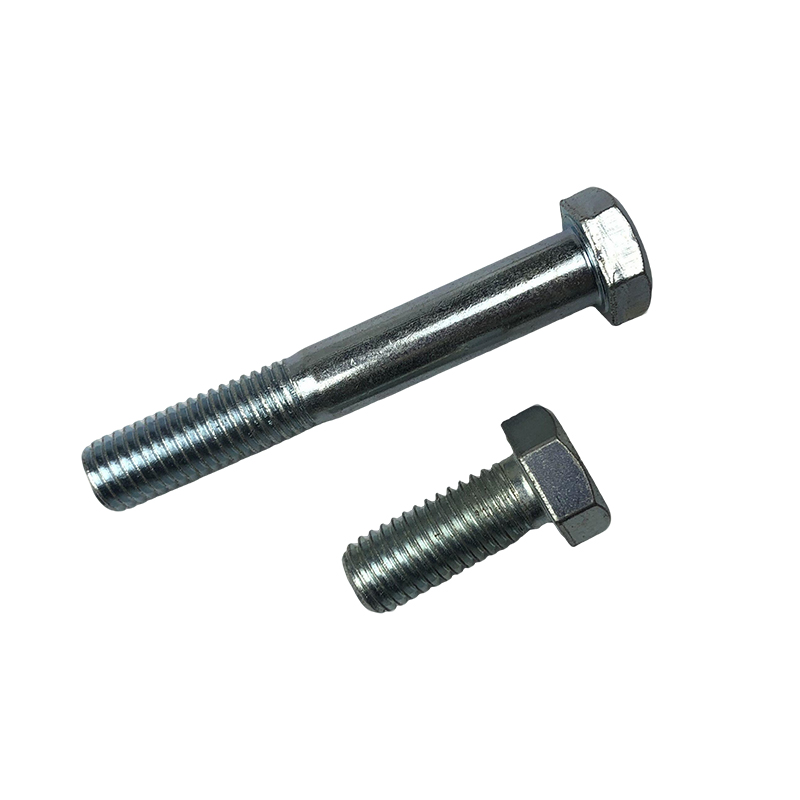 ASME B18.2.1 and DIN Hex Bolts in Carbon SteelGeneral-purpose hex-head bolts for machinery, frames, and structural connections, with full or partial thread and plain, black oxide, zinc, or hot-dip galvanized coatings.View Product →
If your project needs a hex pattern instead of a timber head, that is a good place to start.
A307 Grade A timber bolts rarely win attention on a project, and that is precisely the point. Specified with the right head style, a coating matched to the lumber, and the correct nut and washer, they disappear into the structure and stay there. Specified loosely, they become the callback nobody wants.
If you are working through a connection detail, send over the drawing or the required size list and we will confirm what we can produce, what coating options fit, and how the order should be written. You can reach our team at 0086-573-86121535, or by fax at 0086-573-86121536.